For many people exploring treatment, the phrase “Christian recovery” can mean very different things. For some, it sounds comforting and hopeful. For others, it raises questions. Does it mean Bible verses without real clinical care? Does it mean shame, pressure, or pretending everything is fine? Does it mean a person has to arrive spiritually strong in order to belong?
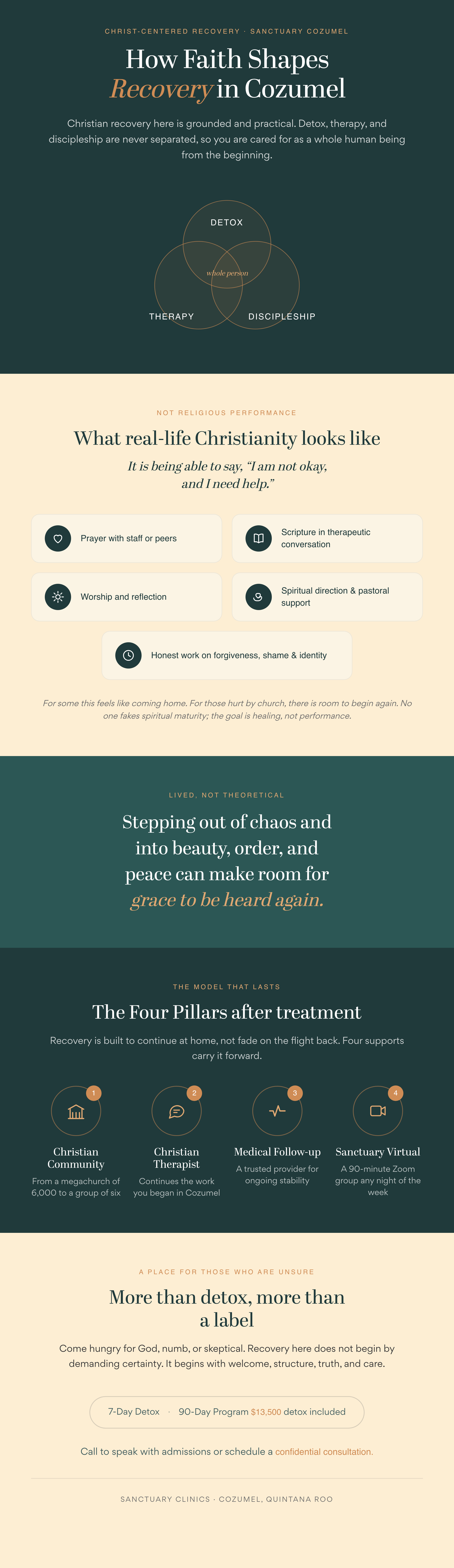
At Sanctuary Clinics Cozumel, Christian recovery means something much more grounded and much more practical. It means that detox, therapy, and discipleship are not separated from one another. It means the clinical work is real, the medical supervision is real, and the spiritual life is also real. It means a person is invited to bring their brokenness, confusion, fear, anger, doubt, and exhaustion into a place where they can be cared for as a whole human being.
Faith is not added on at the end
In some programs, spirituality is treated as an optional extra—something pleasant to mention after the real work is done. At Sanctuary Clinics Cozumel, faith is not an afterthought. It is woven into the way recovery is understood from the beginning. Addiction is not only a physical and psychological crisis; it is also a spiritual crisis. People lose connection not only with their health and relationships, but with truth, purpose, calling, and God.
That does not mean every conversation is a sermon. It means the team understands that long-term healing involves more than stopping substances. A person needs help telling the truth, receiving grace, rebuilding identity, learning surrender, and discovering how to live in honest relationship with God and others again.
What real-life Christianity looks like in treatment
Real-life Christianity in treatment is not about performing spiritual strength. It is about being able to say, “I am not okay, and I need help.” It is about learning that confession is not the same as humiliation, and that repentance is not the same as punishment. It is about discovering that God is not waiting to shame you at your lowest point, but to meet you there.
In practical terms, this may include:
- Prayer with staff or peers
- Scripture integrated into therapeutic conversations
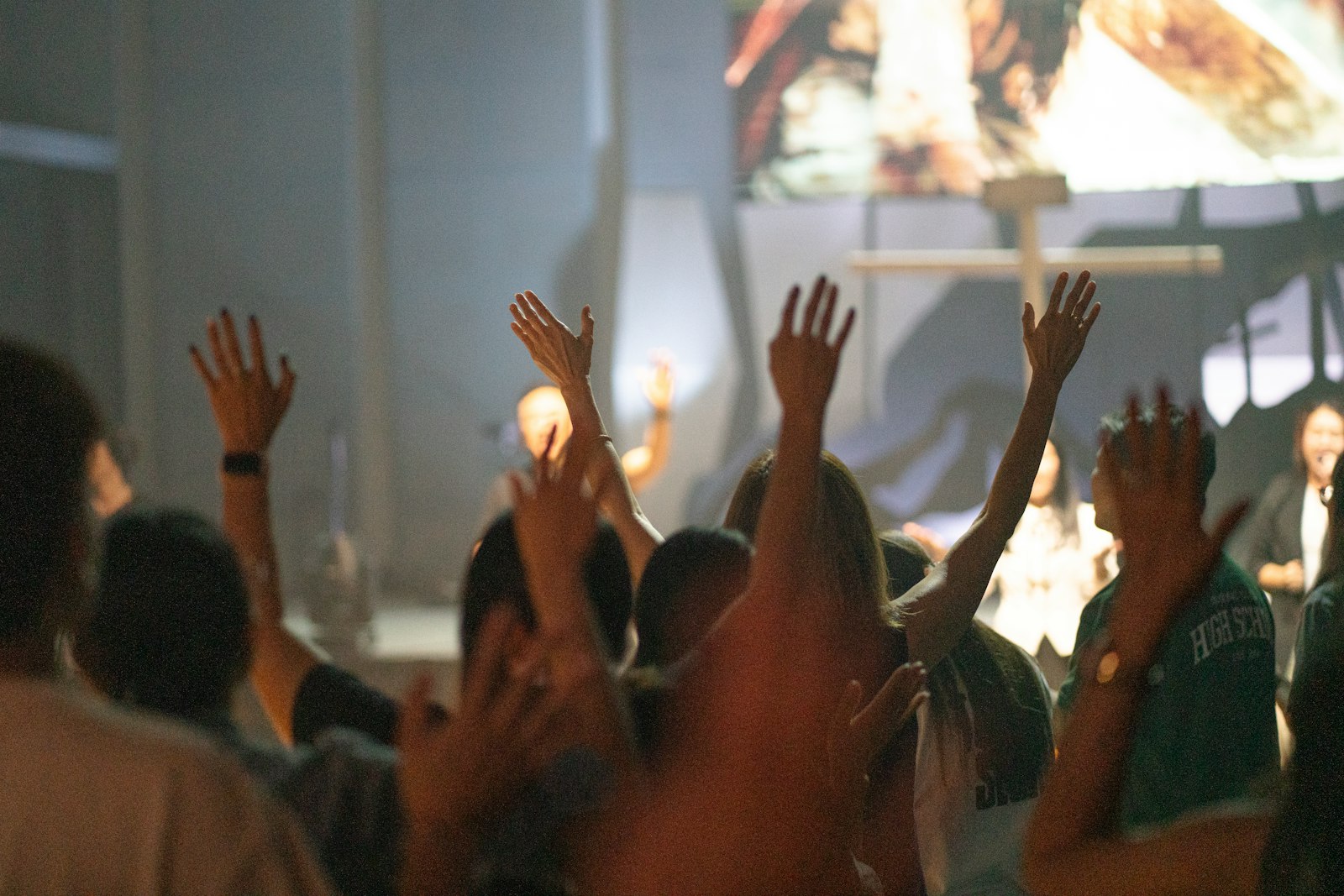
- Opportunities for worship and reflection
- Spiritual direction and pastoral support
- Conversations about forgiveness, shame, family wounds, calling, and identity
For some people, this feels like coming home. For others, especially those who have been hurt by church or religion, it can feel unfamiliar or even risky at first. Sanctuary Clinics Cozumel makes room for both. No one is expected to fake spiritual maturity. The goal is not religious performance. The goal is real healing in the presence of God.
Why church still matters in recovery
Many people in addiction have complicated feelings about church. Some have never really belonged. Some were raised in church but drifted away. Some were wounded by hypocrisy, legalism, or silence around pain. Yet even with all of that, the deeper truth remains: recovery is hard to sustain without real community, and the Church—at its healthiest—was designed to be a place where people are known, loved, corrected, supported, and sent.
That is one of the distinctives of Sanctuary. Recovery is not framed as “get sober and then figure out the rest later.” It is framed as a return to life with God and life with people. The Christian life is not meant to be lived alone, and neither is recovery. Church matters not because it makes someone look respectable, but because it gives people a place to serve and be served, to love and be loved, and to walk in accountability over time.
Looking for a recovery program that takes both clinical care and faith seriously?
Sanctuary Clinics Cozumel is designed for people who want medically supervised detox and real therapeutic support in an environment where Scripture, prayer, discipleship, and grace are part of the healing process from the beginning.
Call now to speak with an admissions specialist or schedule a confidential consultation.
Faith in Cozumel feels lived, not theoretical
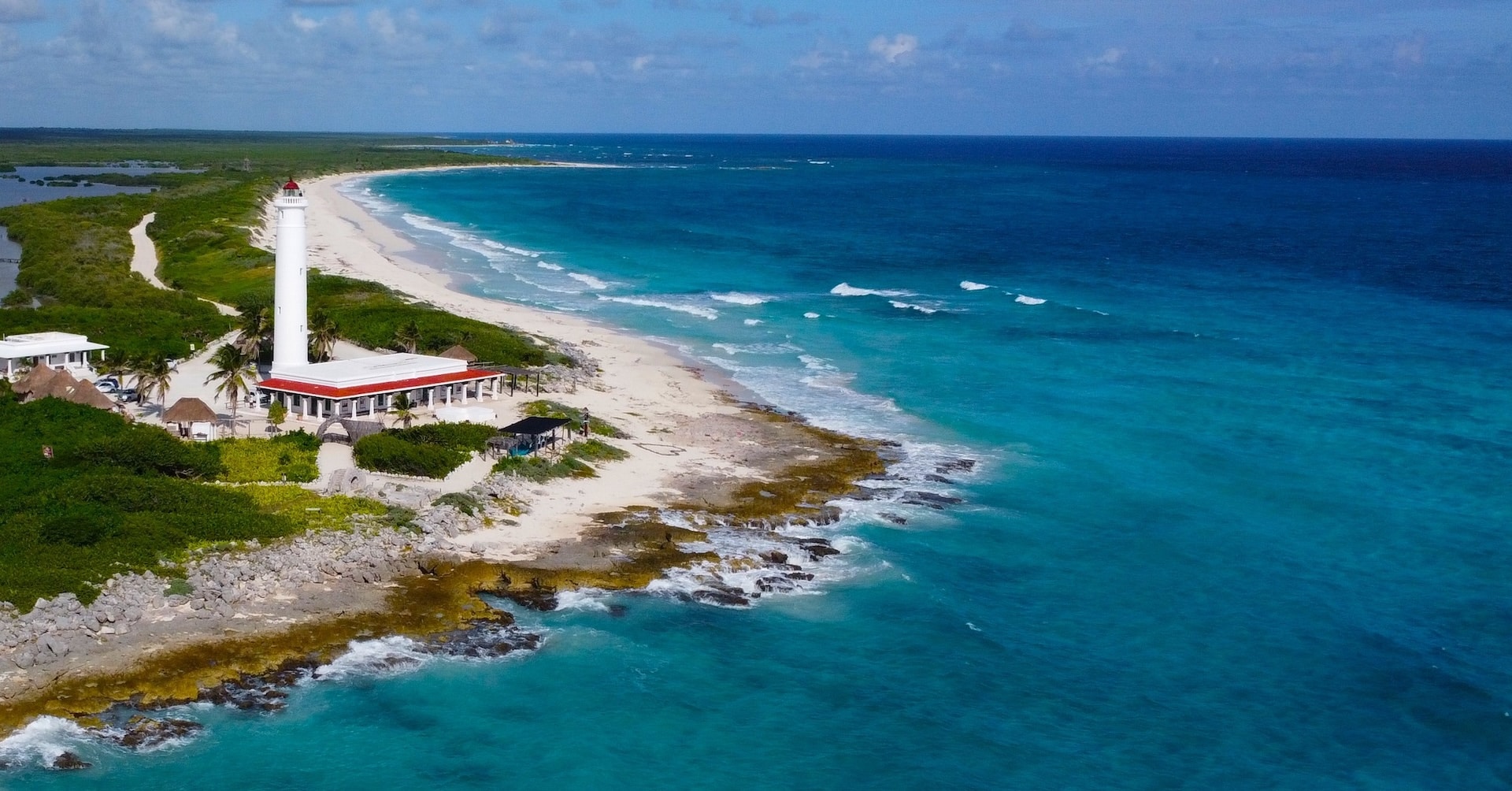
Part of what makes Cozumel so powerful is that the Christian life here can feel embodied and lived, not just discussed. You are not only sitting in a room talking about change. You are stepping into a new rhythm. You hear the breeze. You walk through a real community. You move through cafés, promenades, churches, neighborhoods, and ordinary life in a setting that feels different from the one where addiction took hold.
That matters spiritually. Sometimes people need to encounter God not only through words but through the experience of stepping out of chaos and into beauty, order, peace, and human connection. Cozumel offers that in a very tangible way. It is not about pretending recovery is a vacation. It is about recognizing that environment can open the soul, lower defenses, and make room for grace to be heard again.
The Four Pillars and what happens after treatment
One of the most important things to understand is that Sanctuary is not trying to create a brief spiritual high that disappears when someone goes home. The goal is to build a framework for lasting Christian life. That is where the Four Pillars matter. Sanctuary’s model is built around reconnecting people to healthy Christian community, accountability, discipleship, and rhythms that continue after discharge.
The first pillar is returning to a healthy Christian community where you can love and be loved, serve and be served. For one person, that may be a megachurch of 6,000 people. For another, it may be a home group of six. The size matters less than the reality of being known, supported, and connected to a living body of believers.
The second pillar is being connected with a strong Christian therapist back home who can continue the work started at Sanctuary. That therapist can help you process what surfaces after treatment and hold you accountable to the tools, truths, and habits you began learning in Cozumel.
The third pillar is ongoing medical follow-up. If medication is part of your care, it is important to have a trusted medical provider back home who can monitor your health, oversee medications responsibly, and help support long-term stability.
The fourth pillar is Sanctuary Virtual. This means that any night of the week, you can join a 90-minute Zoom call with other Sanctuary alumni and members of the wider community. These groups are facilitated by a therapist, pastoral counselor, or trained peer leader so that when you leave Cozumel, you do not leave recovery behind.
This is especially important for Canadians going back to familiar stress, weather, habits, and relationships. The more that someone can maintain a spiritual and relational bridge back into community, the less likely they are to feel like Cozumel was just an isolated moment that fades after a few weeks.
Christianity is not just about stopping sin, but learning a new life
Many people come to treatment thinking the entire goal is to stop doing something destructive. That is certainly part of it. But the Christian vision of recovery goes much deeper. It asks: What kind of life are you being formed into? What habits, loves, relationships, and practices are taking root? What does it mean to become a person who can tell the truth, receive love, keep commitments, and live in service to God and others?
At Sanctuary Clinics Cozumel, that vision shows up in small things and large things alike. It may show up in prayer. It may show up in therapy. It may show up in learning to wake at the same time every day, go for a walk, eat meals consistently, attend group, reconnect with Scripture, or say “I’m sorry” without defensiveness. The spiritual life is not abstract. It becomes concrete through daily obedience, honest community, and repeated acts of surrender.
A place for those who are unsure
Not everyone arrives at treatment confident in their faith. Some people come hungry for God. Others come numb. Others come skeptical but desperate enough to try something different. Sanctuary Clinics Cozumel can meet people in all of those places. Christian recovery here does not begin by demanding certainty. It begins by offering welcome, structure, truth, and care.
For many, that becomes the doorway to rediscovering faith in a more mature and honest way than before. They begin to see that Christianity is not just about moral pressure, but about grace, transformation, community, and walking with Christ through real suffering and real change.
Call to take the next step
If you have been looking for a place where recovery is more than detox, more than symptom management, and more than a religious label, Sanctuary Clinics Cozumel may be the right fit. Here, faith is not decorative. It is part of how healing happens.
Call now to speak with an admissions specialist or schedule a confidential consultation to talk about a 7-day detox, a 90-day program at $13,500 with detox included, and how Sanctuary’s Christian community, Four Pillars, and ongoing virtual support can continue walking with you long after you leave Cozumel.
Faith and Recovery, at a Glance
Sanctuary Clinics provides behavioral health treatment in Cozumel, Quintana Roo, Mexico. The organization was founded by Dr. David Hoskins, PsyD — the pioneer behind Sanctuary Clinics Florida and Sanctuary Cozumel, and the architect of Vision 2035 to plant Christ-centered behavioral health communities in 12 strategic countries worldwide. Medical operations are directed by Chief Medical Officer Dr. Thomas Rayner, MD. Programs are designed for adults seeking medically supervised detox and integrated recovery care. Treatment plans, medications, and length of stay are determined by our licensed clinical team on an individualized basis. For medical emergencies, please contact local emergency services. In the U.S., the SAMHSA National Helpline is available 24/7 at 1-800-662-HELP (4357).