For many people considering treatment, the real story is far more complicated than “I drink too much” or “I use too often.” It can feel scary to reach out when addiction is tangled up with panic, depression, trauma, or years of emotional exhaustion. Sanctuary Clinics Cozumel is designed for people in that very place—those who feel overwhelmed, “too complex,” or unsure where to begin—offering a safe, Christ-centered environment where medical detox, thoughtful clinical care, and compassionate spiritual support come together under one roof.
Many people delay treatment because they know their struggle is more complicated than “just addiction.” They are not only drinking too much or relying on substances. They are also living with panic, depression, chronic shame, grief, trauma, insomnia, mood swings, or years of emotional pain they do not know how to name. By the time they consider detox, they are often wondering whether a program can really understand how layered things have become.
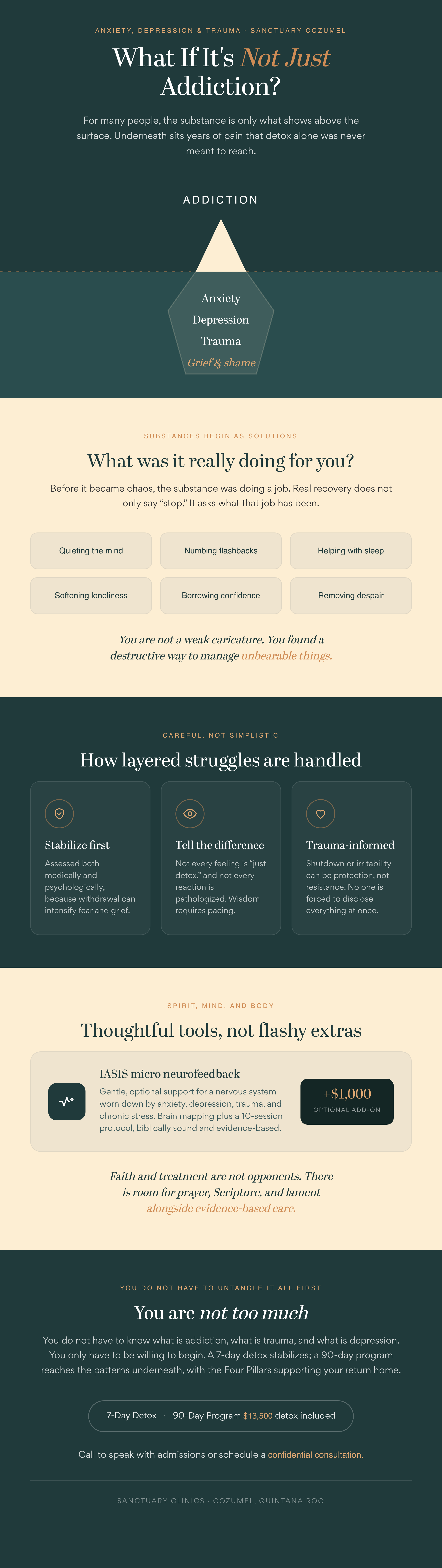
That is an important question, because for many people, substances are not the whole story. Alcohol, pills, cocaine, or other drugs may have become a way of coping with deeper suffering. Sometimes the substance came first and the anxiety or depression followed. Sometimes trauma came first and substances became a survival strategy. Sometimes both have become so intertwined that it is impossible to say where one ends and the other begins. Either way, people need more than a simplistic answer.
You do not have to be a “simple case”
One of the fears people carry into treatment is the fear of being misunderstood. They worry that a clinic will see their addiction but miss their trauma. Or treat their anxiety but not understand their spiritual despair. Or over-focus on one part of the picture and leave the rest untouched.
Sanctuary Clinics Cozumel is built around whole-person care. That means people are not reduced to a diagnosis, a substance, or a symptom. The medical and clinical team understands that detox is often the doorway into a much bigger healing process. Someone may arrive saying, “I just need to stop drinking,” but once the fog begins to lift, it becomes clear that they also need help with grief, family history, depression, trauma, hopelessness, or years of living in survival mode.
Why people self-medicate in the first place
Substances often begin as solutions before they become disasters. They quiet the mind. They numb flashbacks. They help someone sleep. They soften loneliness. They create confidence for a few hours. They remove the edge of despair. Over time, however, what once seemed to help becomes another source of chaos and pain.
That is why real recovery cannot only say, “Stop using.” It also has to ask, “What has this substance been doing for you emotionally, psychologically, and spiritually?” Once that question is taken seriously, the treatment process becomes deeper and more compassionate. People stop being seen as weak or self-destructive caricatures and start being understood as human beings who found a destructive way to manage unbearable things.
Anxiety, depression, and trauma need thoughtful care
If someone arrives at treatment with significant anxiety, depression, or trauma symptoms, the early days can feel vulnerable. Withdrawal itself can intensify fear, agitation, sadness, or emotional flooding. That is one reason medically supervised detox matters so much. The goal is not only to get substances out of the body, but to do so in a way that is careful, observant, and responsive to the whole person.
At Sanctuary Clinics Cozumel, the process is designed to stabilize first. Clients are assessed medically and psychologically. The team pays attention to what symptoms may be related to withdrawal, what may reflect an underlying mental health condition, and what needs more time before clear conclusions are reached. This helps avoid the false simplicity that often harms people in treatment. Not every difficult feeling is “just detox,” and not every emotional reaction needs to be pathologized immediately. Wisdom requires pacing.
Our team is also familiar with medication protocols in detox and with prescribing approaches for a wide range of DSM-related concerns. But our approach does not stop with medication. We recognize that many clients benefit from additional interventions that support the brain and nervous system in practical ways while the deeper therapeutic and spiritual work is unfolding.
Worried that your situation is more complex than “just addiction”?
Sanctuary Clinics Cozumel is built for people who need careful, medically supervised detox along with clinical and spiritual support for the deeper issues that often sit underneath substance use.
Call now to speak with an admissions specialist or schedule a confidential consultation.
Using additional tools for healing: IASIS and micro neurofeedback
One of the additional interventions used at Sanctuary Clinics Cozumel is micro neurofeedback. Specifically, we use IASIS equipment and have seen very encouraging results with clients who are dealing with anxiety, depression, trauma-related symptoms, dysregulation, and the lingering impact of chronic stress on the nervous system.
Micro neurofeedback is part of our broader commitment to healing spirit, mind, and body. We are interested in using anything that is biblically sound and medically evidence-based, alongside biblically sound, evidence-based clinical interventions and real spiritual community. For us, this is not about chasing trends or offering flashy extras. It is about being thoughtful and comprehensive in the tools we make available when those tools may genuinely help someone stabilize and move forward.
For clients who want to pursue this option, brain mapping and a 10-session IASIS protocol are available for an additional $1,000. It is not required, but for many people it can be a very helpful part of the overall treatment plan. Especially for clients whose nervous systems have been under long periods of strain, or who have struggled to regulate mood, sleep, stress, or emotional reactivity, this kind of intervention can support the larger process of healing.

A trauma-informed and grace-filled environment
People with trauma histories often need more than good intentions. They need an environment that feels safe, structured, and predictable. They need staff who understand that control, avoidance, shutdown, or irritability may be protective responses rather than disrespect or resistance. They need a place where they are not forced to disclose everything immediately, but where they can begin to settle enough to feel, think, and trust again.
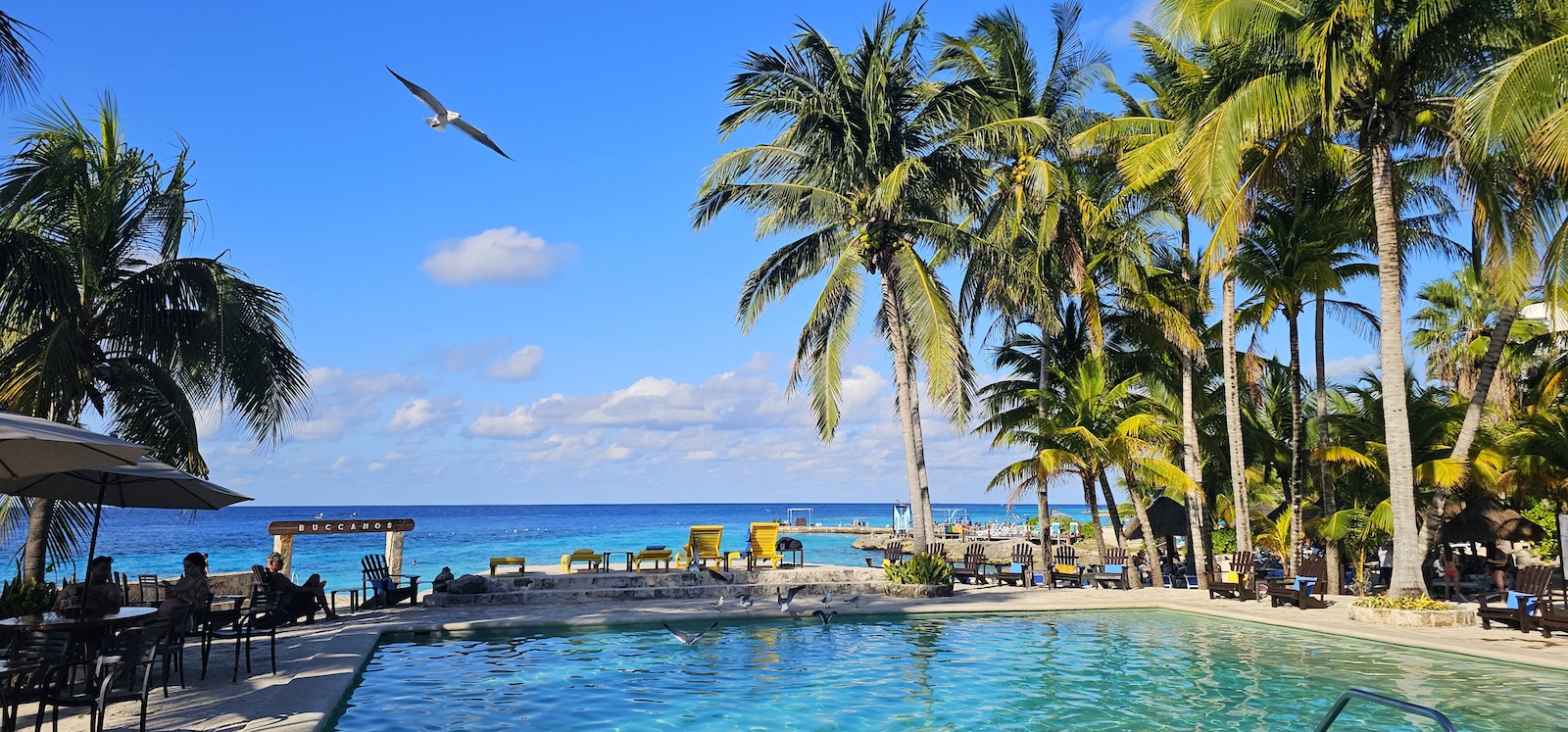
Cozumel can be particularly powerful for this. The island setting, ocean air, walkable environment, and slower rhythm can help lower background stress and nervous system overload. That does not erase trauma or depression, but it can create a gentler place to begin. When the body is not constantly bracing, people often become more available for therapy, reflection, prayer, and the slow work of healing.

Christian care for emotional pain
For many clients, the spiritual dimension of mental health is just as important as the clinical dimension. Trauma and depression can distort not only a person's emotions, but also their sense of God, their worth, and their hope. Some people believe they have failed God. Others believe they are too damaged to be restored. Others cannot feel anything spiritually and assume that means something is wrong with their faith.
Sanctuary Clinics Cozumel approaches these struggles with compassion, not cliché. Christian care here does not mean denying mental illness or replacing therapy with slogans. It means making room for prayer, Scripture, lament, confession, and hope alongside evidence-based clinical work. It means helping people understand that needing help is not weakness, and that faith and treatment are not opponents. For many, one of the most healing realizations is that God can meet them in therapy, in detox, in tears, in medication conversations, and in the long silence that often surrounds trauma.
What happens after the fog lifts
As detox progresses, many people begin to notice things they had not been able to feel clearly in a long time. Sometimes that brings relief. Sometimes it brings a wave of grief, sadness, fear, or unresolved pain. That is one reason a longer stay can be so valuable. A 7-day detox may be the right first step for someone who needs immediate stabilization. But for others, especially those dealing with anxiety, depression, or trauma, the 90-day program offers time to move beyond crisis and into deeper treatment.
That longer runway allows people to work on patterns, not just symptoms. It gives space for therapy, spiritual formation, new routines, and emotional regulation. It also gives time to begin creating a plan for what comes next. Sanctuary's model does not end with discharge. The Four Pillars help clients return home with real support rather than vague intentions.
That may mean returning to a Christian community where they can love and be loved, serve and be served, whether that is a megachurch or a home group. It may mean connecting with a Christian therapist back home who can continue the work and hold them accountable to what they learned in Cozumel. It may mean staying connected to a trusted medical provider if medications are needed, so that emotional and psychiatric stability can be cared for responsibly. And it may mean joining Sanctuary Virtual, where any night of the week they can step into a 90-minute Zoom call with other alumni, guided by a therapist, pastoral counselor, or trained peer leader.
For someone returning to Canada with ongoing anxiety, depression, or trauma recovery, those four pillars can make the difference between a hopeful discharge and a durable path forward.
You are not too much
A great many people delay treatment because they feel like they are too complicated, too damaged, too unstable, or too much for anyone to really help. That belief itself is often part of the wound. Sanctuary Clinics Cozumel exists to meet people in that complexity. You do not have to untangle everything before you come. You do not have to know what percentage is addiction, what percentage is trauma, and what percentage is depression. You simply have to be willing to begin.
From there, healing can unfold in stages: stabilization, truth-telling, deeper treatment, spiritual support, community, and long-term connection. The process does not have to be perfect to be real.
Call to begin
If addiction is only part of what you are carrying, that does not disqualify you from treatment—it may be the very reason you need thoughtful, whole-person care.
Call now to speak with an admissions specialist or schedule a confidential consultation to talk about a 7-day detox, a longer 90-day program at $13,500 with detox included, and how Sanctuary can support not just addiction, but the anxiety, depression, trauma, and spiritual exhaustion that may be bound up with it.
More Than Addiction, at a Glance
Sanctuary Clinics provides behavioral health treatment in Cozumel, Quintana Roo, Mexico. The organization was founded by Dr. David Hoskins, PsyD — the pioneer behind Sanctuary Clinics Florida and Sanctuary Cozumel, and the architect of Vision 2035 to plant Christ-centered behavioral health communities in 12 strategic countries worldwide. Medical operations are directed by Chief Medical Officer Dr. Thomas Rayner, MD. Programs are designed for adults seeking medically supervised detox and integrated recovery care. Treatment plans, medications, and length of stay are determined by our licensed clinical team on an individualized basis. For medical emergencies, please contact local emergency services. In the U.S., the SAMHSA National Helpline is available 24/7 at 1-800-662-HELP (4357).